
Identify Stucco Window Leaks
Written by Stucco Champions — Southern California’s Authority on Exterior Plastering.
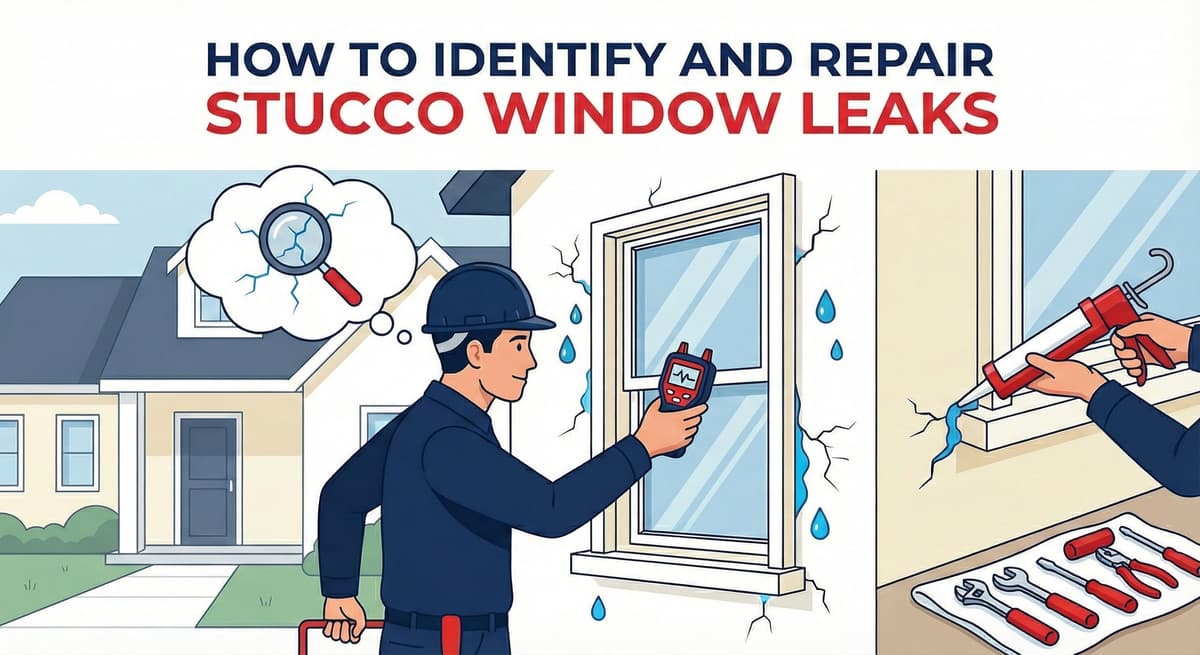
How to Identify and Repair Stucco Window Leaks
In Southern California, window leaks are often misdiagnosed. Homeowners see water on the sill and assume the window itself is failing. However, in 90% of the cases we inspect, the window unit is fine—the failure is in the integration between the stucco and the window flashing.
Water intrusion is not just a nuisance; it is a structural threat. Stucco absorbs water by design, but if the drainage plane behind it is compromised, that water rots the framing studs and shear wall. This guide explains how to diagnose the source and the surgical procedure required to fix it.
1. The Diagnosis: Is it the Window or the Wall?
Before we cut into the stucco, we must determine the entry point. This distinction determines the scope of repair.
| Method | Procedure | What it Tells Us |
|---|---|---|
| Interior Inspection | Remove interior drywall below the sill to inspect plywood/OSB. | Stains on the plywood usually indicate a flashing failure at the window corners. |
| Isolation Test | Seal the window glass/frame with waterproof tape and plastic. Spray the surrounding stucco. | If water still enters, the leak is in the Stucco System (paper/flashing), not the window unit. |
| Spray Rack | Calibrated water spray to simulate rain. | Isolates pressure leaks in the window glazing vs. gravity leaks in the wall. |
Free Assessment
Noticing Stucco Damage?
Get a free on-site assessment from a licensed contractor. $0 deposit, no obligation.
GET FREE ASSESSMENT2. The Usual Suspects: Why Leaks Happen
When we open a leaking wall, we typically find one of three code violations:
A. The "Reverse Lap" (Most Common)
Waterproofing relies on gravity. The upper layer of paper must overlap the lower layer (shingle fashion).
The Failure: The installer tucked the building paper behind the bottom window flange instead of over it. This directs water straight into the wall cavity.
B. Missing Z-Bar Flashing
The top of the window (header) requires a metal Z-Bar to kick water out. If this is missing or improperly integrated with the Weather-Resistive Barrier (WRB), water rolls behind the window frame.
C. Deteriorated Paper
Older homes often used basic "10-minute" paper. Over decades, moisture degrades this barrier, leaving the wood framing exposed to the damp stucco. We replace this with Two Layers of 60-Minute Grade D Paper for superior longevity.
3. The Repair Protocol: Surgical Remediation
You cannot fix a flashing leak with a caulk gun. You must expose the nailing fin.
The Process:
- Cut-Back: We remove 6–9 inches of stucco around the window perimeter to expose the framing and old paper.
- Flashing Repair: We correct the lap. We install new membrane flashing (like flashing tape) around the fins.
- Paper Integration: We install new Grade D paper, ensuring it slides under the existing paper at the top and over the window fin at the bottom.
- Re-Stucco: We install new wire lath and apply a three-coat patch, blending the texture to match the existing wall.
⚠️ The Caulking Trap
Never caulk the bottom flange of a window tight to the stucco. Windows have "weep holes" designed to let internal condensation drain out. If you seal the bottom edge, you trap water inside the frame, which will eventually rot the window itself.
4. Cost Expectations
Because this involves demolition, waterproofing, and finish work, it is a skilled trade repair.
- Typical Range: $400 – $1,800+ per window.
- Variables: Second-story access (scaffolding), custom foam trim replacement, and the severity of dry rot in the framing will affect the final price.
Conclusion: Fix the System, Not the Symptom
A leak is a symptom of a broken system. Simply caulking the edge of the window is a temporary band-aid that often traps more water than it keeps out. To protect your home's structure, the stucco must be opened, the flashing corrected, and the drainage plane restored.
Related Resources
Last week, we shared Stucco Window Leak Repair Guide 101. Dive deeper into the flashing details.