Hidden Costs in Stucco Projects 2025
Written by Stucco Champions — Southern California’s Authority on Exterior Plastering.
Hidden Costs in Stucco Projects: What Homeowners Overlook in 2025
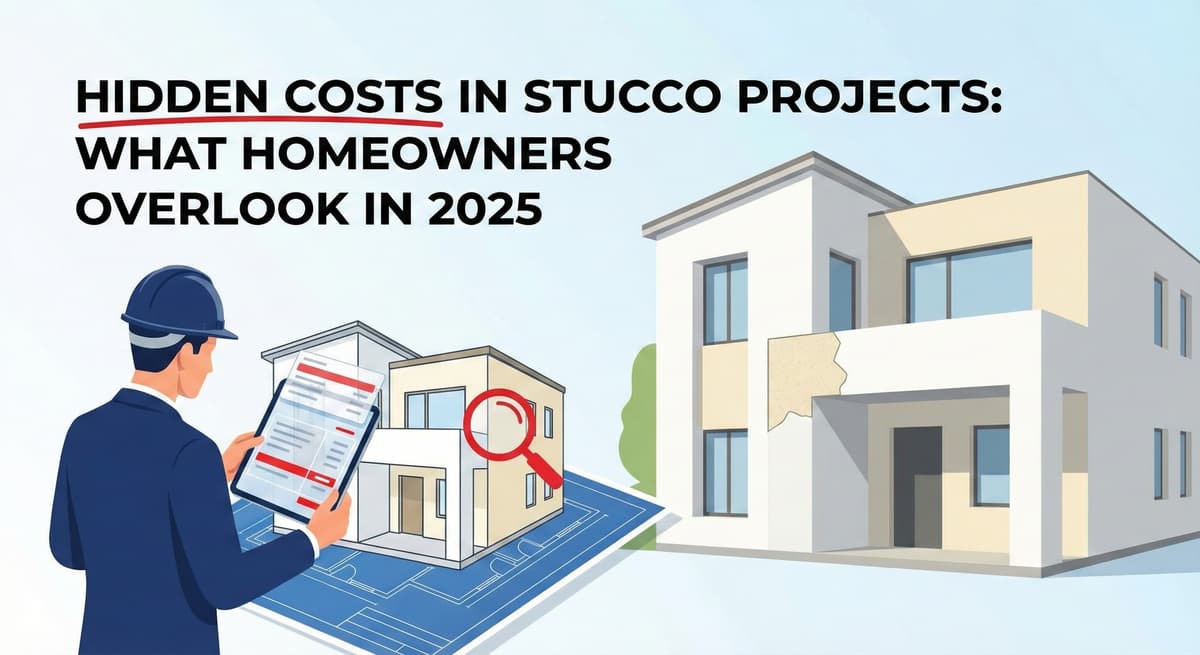
Stucco is the definitive choice for Southern California homes, offering fire resistance and thermal mass. However, the sticker price on a quote rarely tells the whole story. A low bid often excludes critical preparation steps mandated by ASTM C926 standards, leading to expensive change orders later.
Budgeting for a re-stucco or new installation requires foresight. Beyond the basic square footage price, you must account for structural repairs, access logistics, and finish upgrades. This guide breaks down the financial variables that catch homeowners off guard.
1. Surface Preparation: The "Demo" Factor
You cannot apply new stucco over a compromised substrate. If your home has old wood siding or failing paint, the prep work is extensive.
- Sandblasting: If your existing stucco is painted, we must sandblast it to remove the film and create a mechanical bond. Skipping this leads to delamination (stucco falling off).
- Demolition Disposal: Removing old siding or stone veneer generates tons of heavy debris. Disposal fees in California are high and often excluded from base estimates.
Free Assessment
Noticing Stucco Damage?
Get a free on-site assessment from a licensed contractor. $0 deposit, no obligation.
GET FREE ASSESSMENT2. Structural Rot Repair
This is the most common "surprise." When we strip the old paper, we often find dry rot or termite damage in the shear wall (plywood) or studs.
The Cost Reality: We cannot legally or ethically cover rotted wood. We must stop the project, replace the framing, and install new sheathing before proceeding. A "simple re-stucco" can quickly become a structural repair project.
⚠️ The Contingency Fund
Always budget an extra 10–15% for unseen dry rot repairs, especially around windows and the mudsill (foundation line).
3. Scaffolding & Access
If your home is two stories or on a hillside, labor costs skyrocket.
OSHA Compliance: We cannot work off ladders for a full re-stucco. We must erect full scaffolding. This is a fixed cost that involves setup, rental time, and dismantling.
Limited Access: If we cannot get a mixer truck to your backyard, materials must be hand-carried, increasing labor hours.
4. Material Upgrades: Acrylic vs. Cement
The type of finish you choose impacts the bottom line.
- Sand Finish (Cement): The standard option. Lower material cost, but requires eventual painting.
- Smooth Finish (Santa Barbara): Higher labor cost due to the skill and time required to trowel it flat.
- Acrylic Finish: Higher material cost (buckets vs. bags), but offers superior crack resistance and color retention (no painting needed).
5. Cost Breakdown Matrix (2025 Estimates)
Use this guide to evaluate competing bids. If a bid is missing these line items, ask why.
| Expense Category | Average Range | Why It Matters |
|---|---|---|
| Surface Prep | $1,000 – $5,000+ | Sandblasting ensures the new coat doesn't peel off. |
| Scaffolding | $1,500 – $3,500 | Mandatory for safety on multi-story homes. |
| Structural Repairs | $1,000 – $10,000+ | Fixing hidden rot behind the walls. |
| Finish Upgrades | +$2 – $5 per sq. ft. | Acrylics and smooth finishes cost more than standard lace. |
| Disposal Fees | $300 – $1,500 | Hauling away heavy cement and lath debris. |
Conclusion: The Transparent Quote
A cheap quote is usually an incomplete quote. At Stucco Champions, we provide itemized estimates that include prep, scaffolding, and cleanup. We believe you should know the real cost of the project upfront, not halfway through.
Related Resources
Last week, we shared How to Budget for a Stucco Project in 2025. Read this for a deeper dive into financing your exterior renovation.