Color Match Stucco Repairs: Seamless Fixes for a Flawless Finish

Written by Stucco Champions — Southern California’s Authority on Exterior Plastering.
Color Match Stucco Repairs: Blended Repairs for a Flawless Finish
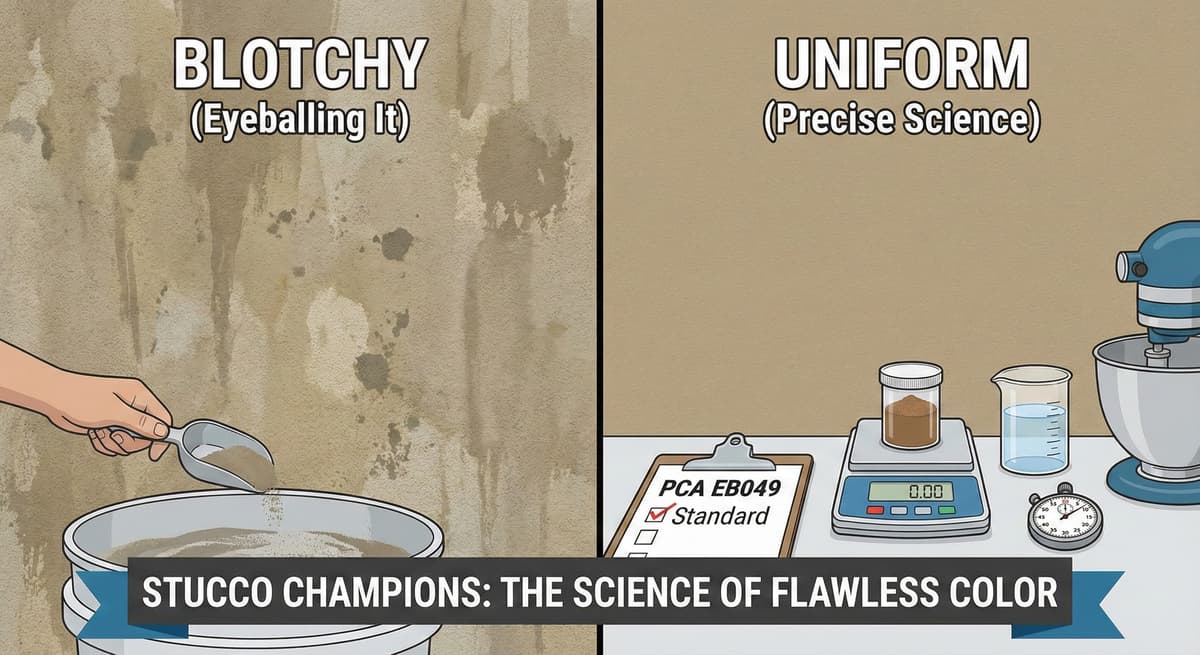
In Southern California, a "bad patch" is often more noticeable than the crack it replaced. When a contractor fills a hole without matching the surrounding color and texture, it leaves a permanent scar on your home's exterior. Whether your stucco is Integral Color (pigment in the cement) or painted, a basic "handyman patch" will not suffice.
True color matching is a forensic process. It requires accounting for UV fading, oxidation, and the natural "mottling" of cement. This guide explains the technical approach to making repairs disappear.
1. Why Color Matching is Difficult
You cannot simply buy a bag of "Beige" stucco and expect it to match a wall that was applied 10 years ago.
The Aging Factor: Stucco is porous. Over time, it absorbs dirt and oxidizes under the sun. The color of your wall today is chemically different from the color of the fresh material in the bag.
Wet Stucco: Appears 3–4 shades darker than the final result.
Dry Stucco: Lightens significantly as the water evaporates (hydration).
Do not judge the color match while the patch is wet. You must allow a minimum of 24 to 48 hours for the alkalinity to balance and the true color to emerge.
Free Assessment
Noticing Stucco Damage?
Get a free on-site assessment from a licensed contractor. $0 deposit, no obligation.
GET FREE ASSESSMENT2. The Science of Texture and Shadow
Color is light reflection. Texture creates shadow. Therefore, Texture = Color.
If we use the perfect pigment match but apply it with a different texture (e.g., a smooth patch on a rough wall), the patch will look different because it reflects light differently.
Our Approach: We match the Aggregate Size (sand grain) and the Trowel Technique to ensure the light hits the patch exactly the same way it hits the existing wall.
3. Material Protocols: Cement vs. Acrylic
The repair method depends on your existing system:
Cement-Based Stucco (Traditional)
This is the most common. It fades and mottles naturally.
The Fix: We use a custom-blended cement mix. However, because new cement is cleaner than old cement, we often recommend Fog Coating the wall after the patch cures to blend everything into one uniform tone.
Acrylic Stucco (Synthetic)
This material is more color-stable but harder to texture match.
The Fix: We must identify the original manufacturer (e.g., Omega, LaHabra) and the original texture grade (Fine vs. Coarse). We order a custom bucket to match the batch.
Painted Stucco
If your home is painted, we are matching paint, not stucco.
The Fix: We perform the structural patch, texture it to match, allow it to cure (28 days or use hot primer), and then paint the area corner-to-corner to hide the transition.
4. Decision Matrix: Patch or Re-Stucco?
Not every wall can be spot-repaired invisibly. Use this guide to determine the scope of work.
| Scenario | Recommended Solution |
|---|---|
| Isolated Damage (One crack or plumbing hole) |
Color-Match Repair. We blend the patch as close as possible. |
| Systemic Wear (Multiple cracks across diverse walls) |
Full Re-Stucco. Spot patching will look like a quilt. A full resurface is required. |
| Faded/Stained Wall (Patch matches, but wall is dirty) |
Fog Coat. We patch the damage and spray the entire wall with cement stain to unify the color. |
| Painted Surface (Recent paint job) |
Texture Patch + Paint. We repair the stucco texture and apply paint to the specific area. |
Conclusion: The Art of the Blend
At Stucco Champions, we don't just fill holes; we restore the envelope. While a perfect match on aged stucco is scientifically impossible without recoating, our "Feathering" techniques and custom tinting bring us closer to invisible than anyone else in the industry.
Related ResourcesLast week, we shared How to Match Stucco Color and Texture. Dive deeper into the specific pigments we use.