ASTM C1063 and C926 Stucco Standards Explained
The Bible of Plastering: Decoding ASTM C1063 and C926 Standards
In the construction industry, there is "Building to Code" and there is "Building to Standard." While local codes set the minimum legal requirement, ASTM Standards define the best practices for longevity and performance.
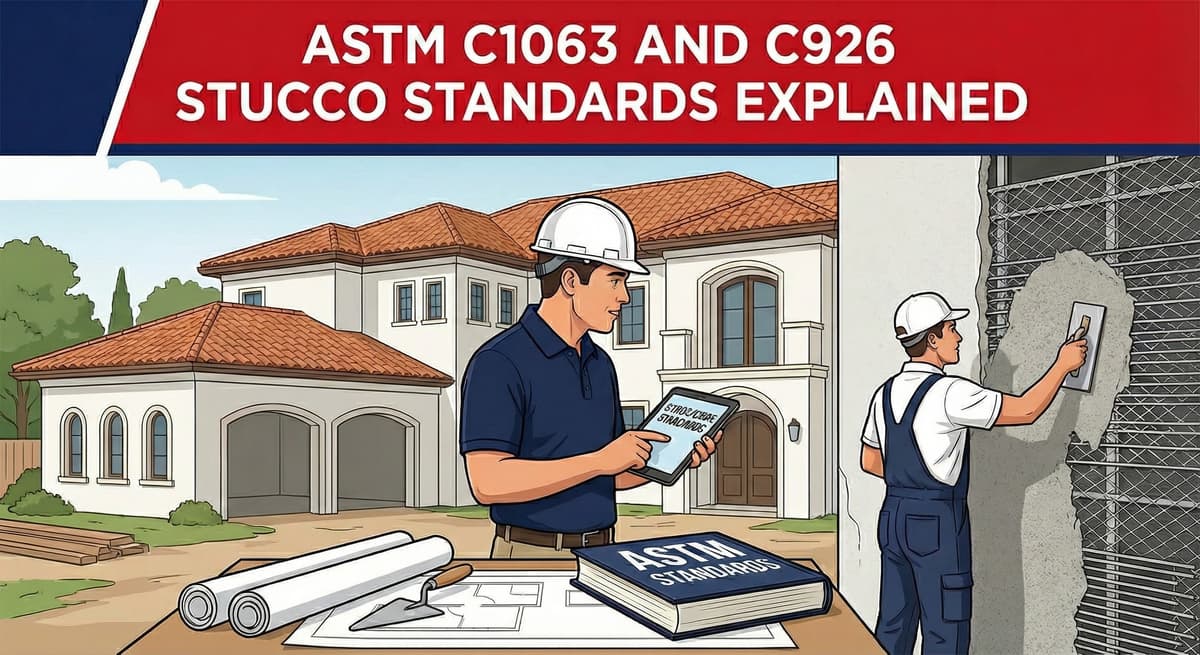
For stucco, there are two critical documents that dictate everything we do: ASTM C1063 (Installation of Lathing) and ASTM C926 (Application of Plaster). If a contractor ignores these rules, the warranty is void, and the wall is destined to fail. This guide translates the engineering jargon into homeowner reality.
1. ASTM C1063: The Skeleton (Lathing)
This standard governs everything before the cement hits the wall. It dictates how we attach the metal reinforcement to the wood frame.
- Fastener Penetration: Staples or nails must penetrate the wood stud by a minimum of 3/4 inch to support the weight of the system (10 lbs/sq ft).
- Lath Overlap: Wire mesh sheets must overlap by at least 1 inch horizontally and 2 inches vertically. This continuity prevents straight-line cracking at the seams.
- Furring: The lath must be held 1/4 inch away from the wall (using furring nails or self-furred wire) to allow the cement to embed fully behind the metal.
Free Assessment
Noticing Stucco Damage?
Get a free on-site assessment from a licensed contractor. $0 deposit, no obligation.
GET FREE ASSESSMENT2. ASTM C926: The Skin (Plastering)
This standard governs the mixing, application, and curing of the Portland cement plaster itself.
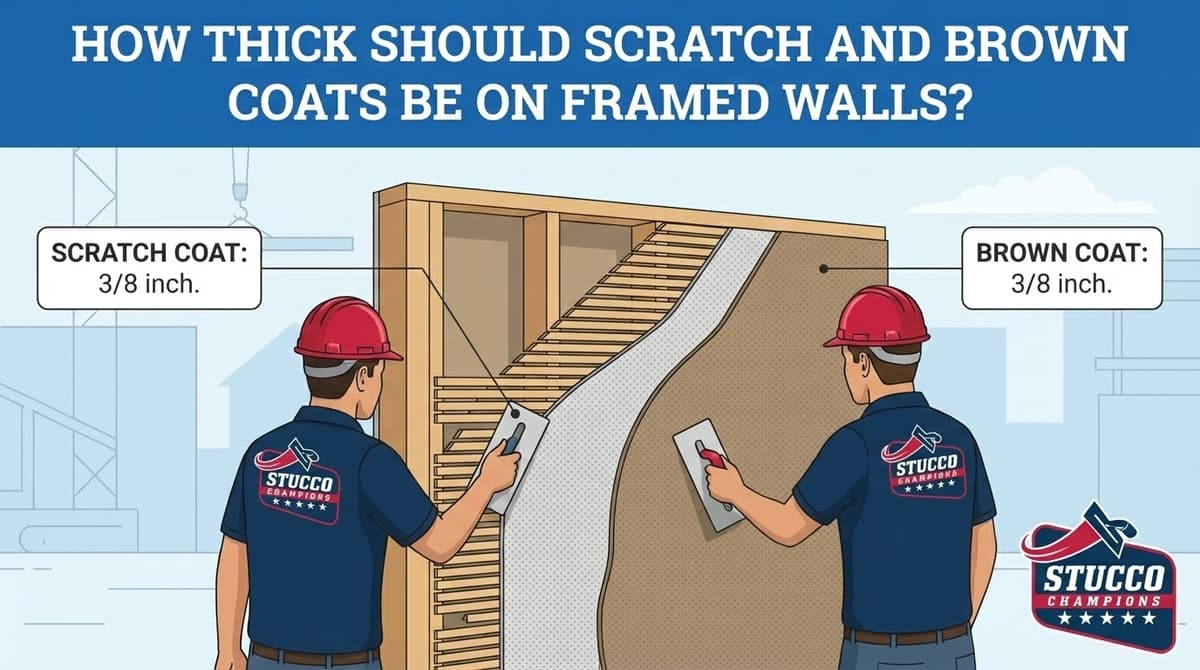
- Three-Coat Thickness: The total system must be a nominal 7/8 inch thick. (Scratch 3/8" + Brown 3/8" + Finish 1/8").
- Curing Times: You cannot rush. The scratch coat must cure for 48 hours before the brown coat. The brown coat must cure for 7 days before the finish coat.
- Moist Curing: The base coats must be kept damp (fogged with water) for 48 hours to ensure proper hydration and strength.
3. Why It Matters: The Failure Points
When we inspect failed stucco, it is almost always a violation of these two standards.
If the contractor installs wire lath tight against the paper (violating C1063 furring rules), the cement cannot get behind the wire. The result is a weak surface bond that delaminates (sheets off) in chunks.
If the finish coat is applied over a "green" (uncured) brown coat (violating C926 curing rules), the shrinkage of the base coat will tear the finish coat apart. This leads to extensive map cracking within the first year.
4. Code vs. Standard
Building Code (CRC): The law. Inspectors check this.
ASTM Standard: The methodology. Inspectors rarely check this in detail, but it is the legal basis for construction defect lawsuits.
At Stucco Champions, we build to ASTM standards because it is the only way to guarantee a 50-year lifespan for the wall.
Conclusion: Ask the Question
When interviewing contractors, ask: "Do you follow ASTM C1063 for lathing?" If they look confused, hire someone else. These standards are the playbook for professional plastering.
Last week, we shared The Comprehensive Guide to Stucco Lathing Wire Types. Learn how the wire fits into the C1063 standard.