Acrylic Stucco Textures and Finishes
Written by Stucco Champions — Southern California’s Authority on Exterior Plastering.
Acrylic Stucco Textures and Finishes: Designing with Synthetic Systems
In the evolution of exterior cladding, Acrylic Stucco (often called Synthetic Finish) has changed the game. Unlike traditional cement which relies on water for curing, acrylics are essentially high-performance, aggregate-infused paints that cure by drying.
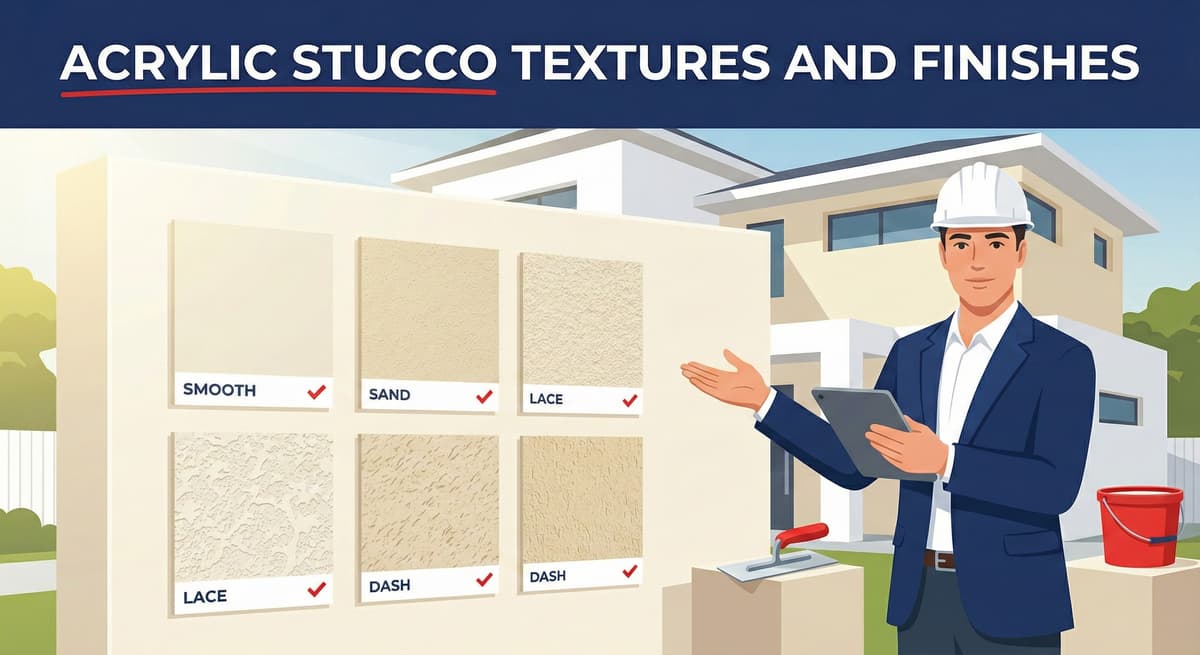
This chemistry allows for a range of textures that traditional cement struggles to match in consistency. Because the material is factory-mixed, the aggregate size is precise, allowing us to dial in the exact roughness or smoothness of your home’s skin. This guide breaks down the specific texture grades available in acrylic systems and how to choose the right one for your architecture.
1. The Science of Aggregate: It’s All About the Sand
Acrylic stucco textures are defined by the size of the aggregate (crushed quartz or silica) suspended in the resin. The larger the rock, the heavier the texture.
Free Assessment
Noticing Stucco Damage?
Get a free on-site assessment from a licensed contractor. $0 deposit, no obligation.
GET FREE ASSESSMENTFine Aggregate (1.0mm / "Fine")
The Look: A subtle, sandpaper-like finish. It creates a uniform, modern appearance that mimics a light sand finish.
Best For: Contemporary homes or commercial buildings where clean lines are priority.
Pros: Easier to clean (holds less dirt) and looks sleek.
Cons: Because it is thin (1/16"), it "telegraphs" imperfections. The base coat underneath must be perfectly flat, or you will see every wave in the wall.
Medium Aggregate (1.5mm / "Sand")
The Look: The industry standard. It balances smoothness with enough grit to hide minor wall imperfections.
Best For: Residential renovations. It provides enough depth to look like traditional stucco but with the color consistency of acrylic.
Pros: Forgiving on older walls; durable against abrasion.
Coarse Aggregate (3.0mm / "Swirl")
The Look: Heavy, rugged, and distinct. The large stones create deep pockets and shadows.
Best For: Mediterranean or Rustic designs where "mass" and texture are desired.
Cons: Harder to clean. The deep crevices trap dust and spiderwebs, requiring more frequent pressure washing.
2. Manufacturer Specifics: LaHabra vs. Omega
While the chemistry is similar, every manufacturer has their own naming convention for these textures. Knowing the brand helps you order the right sample.
LaHabra Perma-Finish
- Smooth: Very fine, almost flat.
- Fine: Standard sand texture.
- Swirl: Contains large aggregate designed to be troweled in a circular motion to create "worm" tracks.
- Coarse: Heavy aggregate for a rough, stone-like feel.
Omega & El Rey
Brands like Omega and El Rey (Perma-Flex) offer similar tiers, often labeled as "Max Tex" or "Medium." Regardless of the name, always ask to see a physical sample board, not just a photo.
3. Specialty Textures
Beyond the standard "Sand" finish, acrylics can be manipulated to create custom looks.
- Freestyle / Skip Trowel: Even though acrylic is thinner than cement, skilled plasterers can layer it to create a "Knockdown" or "Lace" texture. This bridges the gap between the durability of acrylic and the look of Old World Spanish stucco.
- Multi-Color Applications: Because acrylic is consistent, we can layer two different colors to create a mottled, antiqued effect that mimics aged plaster.
4. How to Choose: The Decision Matrix
When selecting a texture, consider three factors:
- The Wall Condition: Is your existing wall wavy or scarred? Choose a Coarse or Medium texture to hide the flaws. A Fine texture will act like a magnifying glass for imperfections.
- The Style: Modern architecture demands Fine textures. Traditional architecture benefits from Coarse or Swirl textures.
- Maintenance: Do you live on a busy street with exhaust and dust? Go Fine. It catches less debris and washes off easily.
Conclusion: Precision in a Bucket
Acrylic stucco offers a level of precision that traditional cement cannot match. By selecting the exact aggregate size, you control the shadow, depth, and durability of your home’s exterior. Whether you want the sleek look of a fine finish or the rugged durability of a coarse aggregate, acrylic systems deliver consistent results.
Related Resources
Last week, we shared Acrylic Stucco Brands: A Comprehensive Guide. If you know the texture you want, find out which brand does it best.