

Written by Stucco Champions — Southern California’s Authority on Exterior Plastering.
Physics of Pigment: How Color Choice Impacts Stucco Performance
Choosing a stucco color is the most visible decision a homeowner makes, but it is also an engineering decision. In Southern California, color dictates more than curb appeal; it dictates the thermal performance and maintenance cycle of your home.
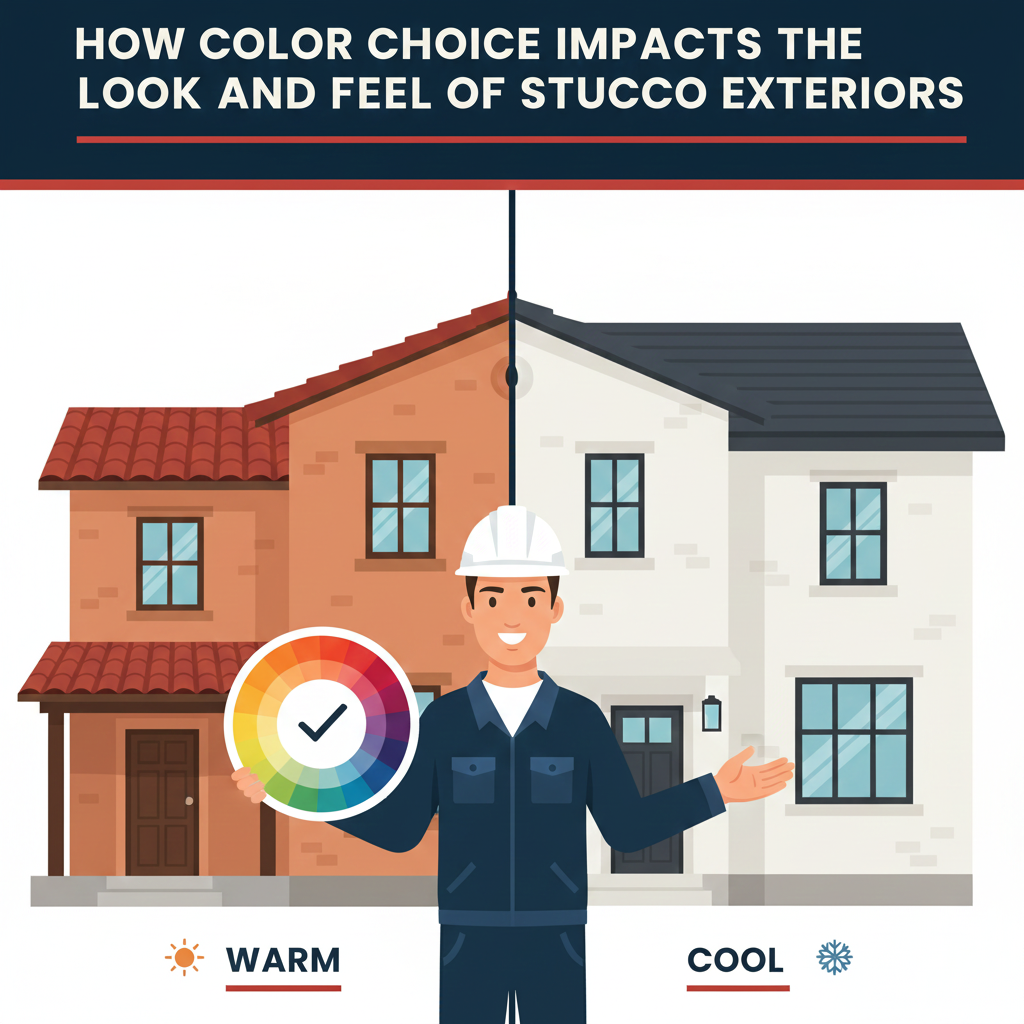
Dark colors absorb heat; light colors reflect it. This simple rule of physics has profound implications for a rigid masonry shell like stucco. If you choose the wrong color for your climate or material type, you invite cracking, fading, and efflorescence. This guide explains the science behind the swatch.
1. Light Reflectance Value (LRV)
Every stucco color has an LRV Number (0 = Black, 100 = White). This measures how much solar energy the wall reflects.
- High LRV (Light Colors): Reflects heat. Keeps the stucco cool, reducing thermal expansion. Best for Traditional Cement finishes.
- Low LRV (Dark Colors): Absorbs heat. Can raise the surface temperature of the wall to 150°F+, causing rapid expansion and contraction.
If you apply a dark charcoal stucco (Low LRV) on a south-facing wall in Riverside, the wall will expand significantly during the day and shrink at night. This Thermal Shock leads to "spiderweb" cracking. If you must have dark walls, you need a flexible Acrylic finish, not rigid cement.
2. Material Compatibility Matrix
Not all colors work with all materials. Your desired aesthetic dictates the chemistry we use.
| Color Family | Required Material | Why? |
|---|---|---|
| Whites & Pastels | White Cement Base | Grey cement makes light colors look muddy. White cement ensures color purity. |
| Earth Tones (Tan/Beige) | Traditional Grey Cement | Iron oxide pigments blend naturally with grey cement, offering a rich, mottled look. |
| Dark/Vibrant (Blue/Black) | Acrylic (Synthetic) Finish | Cement cannot hold dark pigment without turning chalky (efflorescence). Acrylic encapsulates the color. |
3. Perception: How Color Changes Scale
Beyond physics, color alters the architectural weight of the home.
- Light Colors: Make a home feel larger and more expansive. They highlight architectural details like foam trim and quoins by creating shadow lines.
- Dark Colors: Make a home feel smaller and "grounded." They hide dirt and stains but can obscure details because shadows don't show up against dark walls.
4. The Cost of Color
Color choice impacts the budget in three ways:
- Pigment Cost: Standard earth tones are cheap. Deep reds, greens, and blues require expensive synthetic pigments that can add $2-$4 per square yard to the material cost.
- Base Material: White cement is more expensive than grey cement. If you want a "Swiss Coffee" look, expect a premium for the white base.
- Maintenance: Dark colors fade faster. You may need to re-coat a dark home every 10 years, whereas a beige home can go 20 years without fading noticeably.
Conclusion: Balance Beauty and Biology
The best color for your home is one that balances your aesthetic goals with the realities of the Southern California sun. If you want low maintenance, stick to high-LRV earth tones in traditional cement. If you want high drama with dark colors, invest in a premium Acrylic system to handle the heat.
Last week, we shared LaHabra Stucco Color Charts. Browse the standard palette to see LRV ratings.