Where to Buy Stucco Materials: A Comprehensive Guide
Written by Stucco Champions — Southern California’s Authority on Exterior Plastering.
Where to Buy Stucco Materials: A Comprehensive Sourcing Guide
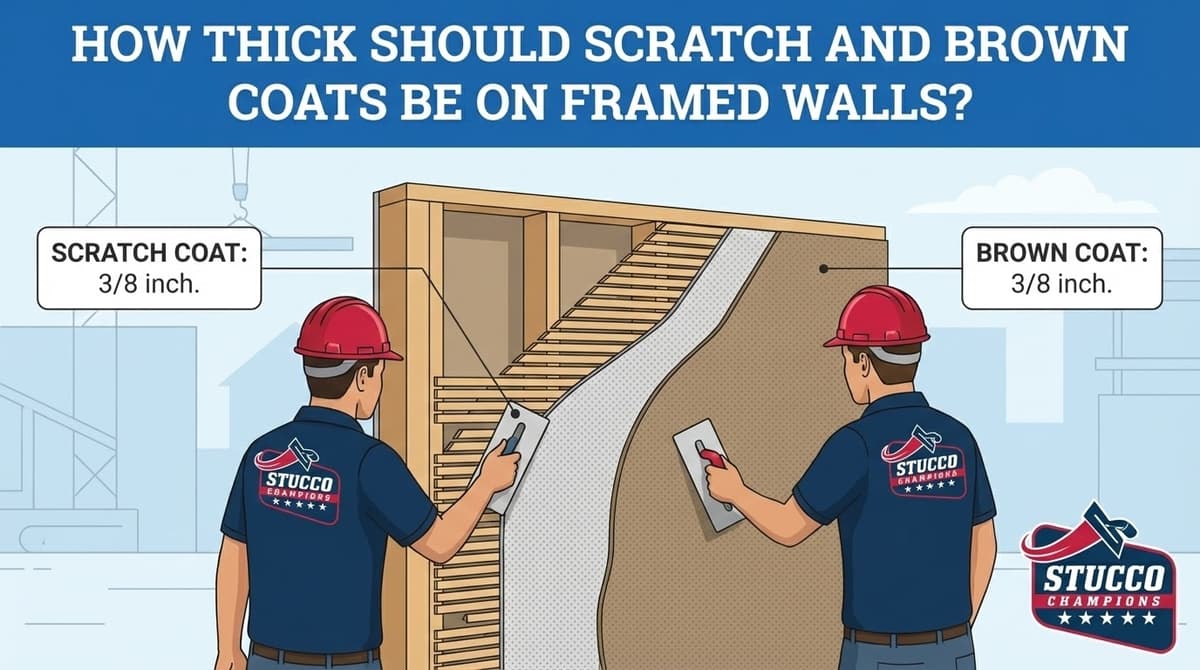
If you are planning a stucco project—whether it is a small patch or a full re-coat—the first step is sourcing the right materials. While big-box hardware stores are convenient, they often lack the specialized components required for a code-compliant stucco assembly.
Using generic products can compromise the structural integrity of your wall. This guide breaks down where to find professional-grade lath, cement, and finish materials in Southern California, and why the source matters.
Free Assessment
Noticing Stucco Damage?
Get a free on-site assessment from a licensed contractor. $0 deposit, no obligation.
GET FREE ASSESSMENT1. The "Big Box" Trap (Home Depot / Lowe's)
These stores are excellent for general construction but limited for plastering.
- What to Buy: Basic tools (trowels, hawks), masking tape, and plastic sheeting.
- What to Avoid:
- Lath: They typically only carry lightweight, generic wire mesh and "single-ply" paper. Professional code often requires heavy-duty self-furring lath and "two-ply" 60-minute paper, which they rarely stock.
- Finish Coat: They usually only stock "Base" stucco (Grey) and lack the factory-tinted finish bags needed for color matching.
2. The Professional Solution: Lath & Plaster Supply Yards
To get the materials we use at Stucco Champions, you must visit a dedicated supply yard (e.g., Hub, Westside, or Thompson).
The Advantage:
1. Graded Sand: They sell washed plaster sand that meets ASTM C144 standards. This angular sand locks together better than the rounded "play sand" found at hardware stores.
2. Fresh Cement: Because they turn over inventory daily, their cement bags are fresh. Old cement (sitting on a shelf for months) can have "pack set," making it lumpy and weak.
3. Specialty Trims: They stock every size of weep screed, casing bead, and corner aid in galvanized, zinc, and vinyl.
3. Sourcing Finish Materials (Color)
If you need a specific color, you cannot mix it yourself with paint tint.
Integral Color Bags: Supply yards stock the full line of LaHabra, Omega, and Merlex finish coats. These are factory-blended bags where the pigment is weighed by computer, ensuring batch-to-batch consistency.
Acrylic Pails: They also have "tint machines" for acrylic stucco, allowing them to mix custom colors on-site in 5-gallon buckets, just like a paint store.
⚠️ The Sand Warning
If you buy bulk sand from a landscape yard, ask if it is "Plaster Sand." Concrete sand is too coarse (rocks will drag in your finish), and masonry sand is too fine (weak bonding). You need specific Washed Plaster Sand for a proper mix.
4. Buying Foam Trim & Moldings
Architectural foam (pop-outs, sills, cornices) is not sold at hardware stores.
Where to Go: Specialized foam fabricators or the Lath & Plaster yard. They can cut custom profiles to match your architectural drawings.
Tip: Always buy "pre-coated" foam if possible. It comes with a base coat and mesh already applied, saving you labor and ensuring durability.
Conclusion: Source Like a Pro
The quality of your material dictates the longevity of your wall. Don't compromise your home's envelope by using generic, "all-purpose" products. Go to the supply yard where the pros go. The counter staff are experts and can ensure you leave with the right paper, the right wire, and the right mix for your specific project.
Related Resources
Last week, we shared Stucco Materials at Home Depot: An In-Depth Guide. If you are in a pinch and must use a box store, read this to know what is safe to buy.
Frequently Asked Questions About Stucco
How much does stucco repair cost in Orange County and Los Angeles?+
Stucco repair typically ranges from $500 for minor crack patching to $5,000+ for full re-stucco of a single elevation. The exact cost depends on the damage type (hairline cracks, water damage, delamination, weep screed failure), the square footage involved, and whether the original three-coat or one-coat stucco system needs to be matched. Stucco Champions provides fixed-price written estimates after a free on-site assessment — no hourly billing, no surprise change orders. See our stucco repair cost guide for detailed pricing by repair type.
How long does stucco last in Southern California?+
Properly installed three-coat stucco lasts 50-80+ years in Southern California's climate. The most common failure points aren't the stucco itself — they're the supporting components: corroded weep screed, deteriorated building paper behind the stucco, and improperly sealed window flashing. Most "stucco failures" are actually moisture-intrusion failures that start at one of these points. Annual visual inspection catches problems before they spread, which is why we offer free weep screed assessments for homeowners in our service area.
Can I repair stucco myself, or do I need a contractor?+
Hairline cracks under 1/8 inch wide can be sealed with elastomeric caulk by a homeowner. Anything larger — pattern cracks, delamination (where stucco pulls away from the wall), water-damaged areas, or chimney/window leak repairs — requires a licensed contractor. Improper DIY repair on these is the #1 cause of repeat failures because the underlying cause (usually moisture) isn't addressed. California's CSLB requires a license for any stucco work over $500. Looking for a highly-rated stucco contractor in Southern California? We are a CSLB-licensed and insured team ready to help.
How do I know if I need stucco repair vs. full re-stucco?+
If less than 30% of an elevation has visible damage, repair is the right call. If you see large areas of cracking, multiple zones of delamination, or the underlying paper and lath have rotted across an entire wall, full re-stucco of that elevation is more cost-effective long-term. Our free assessment includes a moisture survey and lath inspection so you get a defensible recommendation either way — not just a quote pushing whichever option costs more.
Do you offer warranties on stucco work?+
Yes. Stucco Champions provides a written 5-year workmanship warranty on all stucco repairs and a 10-year warranty on full re-stucco. We're a CSLB-licensed and insured contractor (license #1122006 — verifiable at cslb.ca.gov), which means our work is backed by California's contractor licensing board, not just our own promise. Request a free estimate to see the warranty terms in writing before you sign anything.
How long does a stucco repair take?+
Most patch repairs are completed in 1-2 days, including a 24-hour cure time before texture matching and color application. Full re-stucco of a single elevation runs 5-7 working days because each coat (scratch, brown, finish) needs to cure properly before the next is applied. We schedule around weather — California stucco needs daytime temperatures above 50°F with no rain forecast for at least 24 hours after each coat. Our crew shows up on time, every time.