Enhance Your Exterior Walls with Vibrant Stucco Colors | Durable and Stunning

Written by Stucco Champions — Southern California’s Authority on Exterior Plastering.
Does Stucco Come in Different Colors? An In-Depth Look
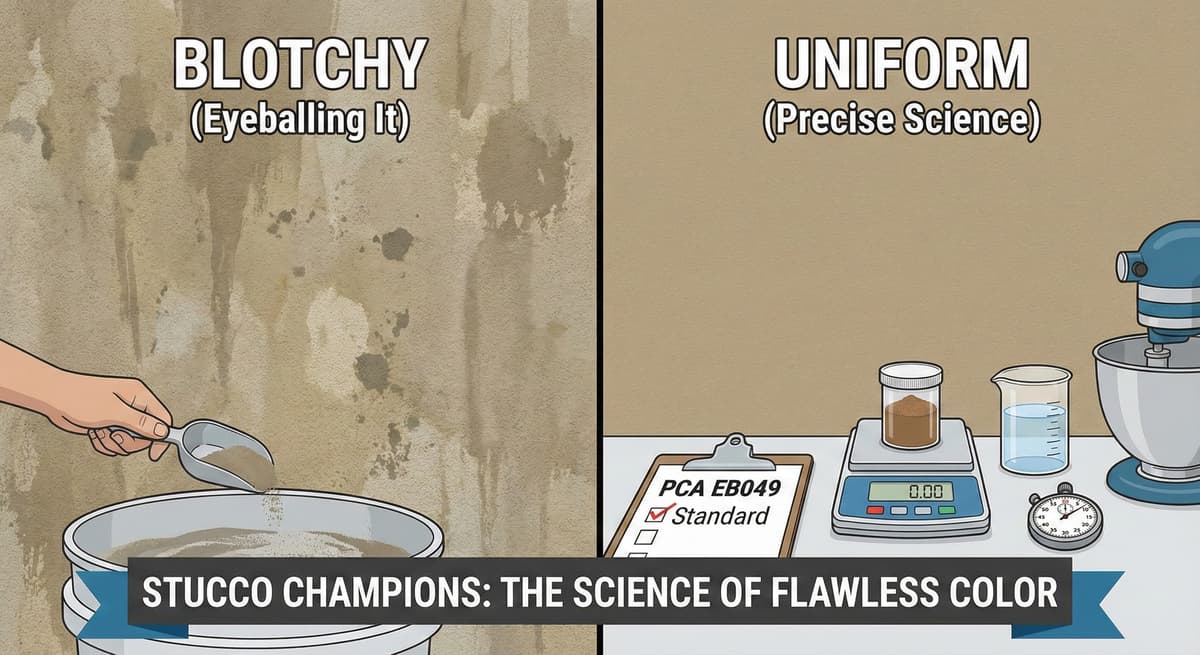
One of the most persistent myths in exterior design is that stucco is just "grey cement" that must be painted. This is false. Modern stucco is an Integral Color System, meaning the pigment is mixed directly into the finish coat. This creates a durable, maintenance-friendly facade that doesn't peel or chip like paint.
However, the range of colors available to you depends entirely on the type of material you choose. A traditional cement finish behaves differently than a modern acrylic finish. This guide explains the chemistry of color selection for your Southern California home.
1. The Two Chemical Systems
To choose a color, you first must choose a material.
Free Assessment
Noticing Stucco Damage?
Get a free on-site assessment from a licensed contractor. $0 deposit, no obligation.
GET FREE ASSESSMENTTraditional Cement Finish (The Earth Tones)
This is the classic "California Stucco." It is a mixture of white Portland cement, lime, sand, and iron oxide pigments.
The Palette: Limited to earth tones (Beige, Tan, Cream, Terracotta, Grey).
The Look: Natural and organic. It has "mottling" (subtle cloudiness) where the color varies slightly across the wall. This is desirable for Spanish and Tuscan architecture.
The Limit: You cannot achieve dark or vibrant colors. Dark pigments weaken the cement bond and fade rapidly in the sun (Efflorescence).
Acrylic Finish (The Vibrant Tones)
This is a synthetic, polymer-based coating. It comes wet in a bucket, similar to paint but with aggregate (texture).
The Palette: Unlimited. Because it uses synthetic pigments encapsulated in acrylic resin, we can match almost any paint color, including deep Blues, Greens, and Charcoals.
The Look: Uniform and consistent. There is no mottling. It looks like a very thick, textured paint job.
2. Selecting Your Color: Charts vs. Reality
Major manufacturers like LaHabra, Omega, and Merlex provide extensive color charts. However, these paper charts are deceptive.
⚠️ The Texture Factor
Stucco is rough. A rough surface casts thousands of tiny shadows. This makes the color on your wall appear darker and richer than the smooth chip on the color chart. Always choose a shade slightly lighter than you think you want.
3. The "Wet Sample" Protocol
Never approve a color based on a PDF or a brochure. We strictly recommend the following process:
- Select 3 Candidates: Choose your target color, one lighter, and one darker.
- Apply a Mock-Up: We apply a 2' x 2' physical sample of the actual material onto a discreet part of your wall.
- The 24-Hour Rule:
[Image of thermal imaging camera usage]
(Note: Placeholder for drying process). Wet stucco is 3-4 shades darker than dry stucco. You must let the sample cure for at least 24 hours to see the true, final color.
4. Why Some Colors Fail
In Southern California, we battle UV radiation and alkalinity.
- Fading: Organic pigments (Blues, Yellows) fade faster than inorganic pigments (Reds, Browns). If you want a bright blue house, you must use an Acrylic finish to protect the pigment.
- Alkalinity Burn: New cement has a high pH. If you paint over it too soon, or use cheap pigment, the alkali will "burn" the color, turning it white or yellow. Integral color bags are formulated to resist this chemical reaction.
Conclusion: Integral Color is Superior
While painting stucco is an option, choosing an integral color finish is a better investment. It allows the wall to breathe, reducing rot risk, and it eliminates the need to repaint every 7-10 years. Whether you want the rustic charm of mottled cement or the sleek uniformity of acrylic, the color is built to last.
Related Resources
Last week, we shared The Weep Screed and Its Importance in Stucco Walls. Color is aesthetic, but drainage is structural.