Avoid Cheap Stucco Work: What You Need to Know
Written by Stucco Champions — Southern California’s Authority on Exterior Plastering.
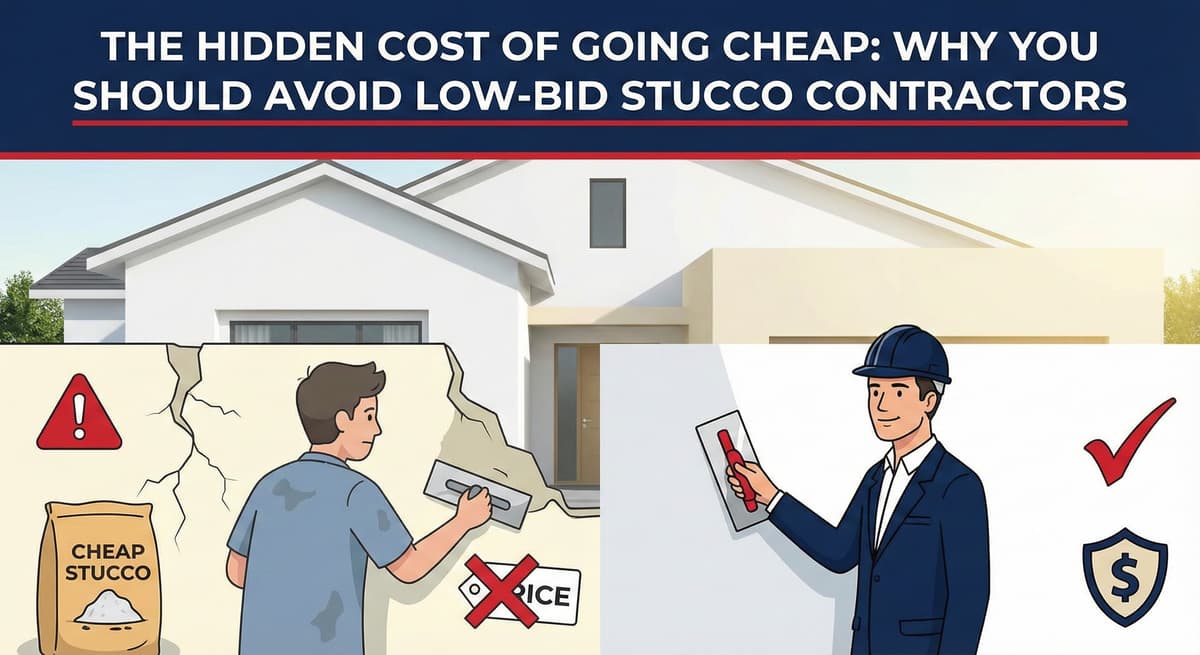
Hidden Costs in Stucco Projects: Why the Lowest Bid Is Often the Highest Cost
When reviewing bids for a stucco project, the disparity between the highest and lowest price can be shocking. It is tempting to choose the bargain option, but in the construction industry, a significantly lower price usually means something critical has been omitted.
Stucco is a multi-layered system. If a contractor skips the waterproofing to save money, the damage won't be visible for years—until the dry rot sets in. This guide exposes the hidden costs behind "cheap" stucco work and why investing in a comprehensive scope of work saves you money in the long run.
1. The "One-Coat" Switcheroo
A common tactic is quoting a "One-Coat" system when you asked for a "Three-Coat" system.
The Difference: A Three-Coat system is 7/8" solid cement (impact resistant, fire-rated). A One-Coat system is foam-backed with a thin 3/8" cement shell. While One-Coat is energy efficient, it is cheaper to install. If you are paying for Three-Coat durability but getting One-Coat, you are overpaying.
Free Assessment
Noticing Stucco Damage?
Get a free on-site assessment from a licensed contractor. $0 deposit, no obligation.
GET FREE ASSESSMENT2. The Waterproofing Shortcut
The most expensive part of a stucco job isn't the cement; it's the labor to install the flashing and paper correctly.
⚠️ What Gets Skipped
- Single-Ply Paper: Using one layer instead of the code-mandated two layers.
- Missing Weep Screeds: Failing to install or retrofit the metal drainage screed at the foundation.
- Caulking: Using cheap painter's caulk instead of high-performance polyurethane sealant around windows.
The Cost: Water intrusion damage (mold/rot) costs an average of $5,000 - $15,000 to remediate later.
3. The Bond Failure (Surface Prep)
If you are re-stuccoing a painted home, the paint must be removed via sandblasting to ensure a mechanical bond.
The Shortcut: Low-bid contractors often skip sandblasting and just apply a cheap liquid glue over the paint.
The Result: Delamination. The heavy new stucco pulls the old paint off the wall, causing large sheets of stucco to fall off within 3-5 years.
4. Comparison Matrix: Value vs. Price
Here is what a professional bid includes vs. a bargain bid:
| Item | Professional Bid | Bargain Bid |
|---|---|---|
| Waterproofing | 2-Layer 60-Minute Grade D Paper | 1-Layer or None |
| Lath | 17-Gauge Self-Furred Wire | Generic Chicken Wire |
| Material | Factory Premixed Colors | Field Mixed (Inconsistent) |
| Prep | Sandblast & Crack Mesh | Glue & Go |
| Warranty | Written (Labor & Material) | Verbal or None |
5. Insurance & Licensing: The Ultimate Risk
A contractor with a significantly lower bid often lacks Workers' Compensation Insurance.
The Risk: If a worker falls off scaffolding on your property, you are liable for their medical bills and lost wages. Always verify the CSLB license and ask for a certificate of insurance.
Conclusion: Pay Now or Pay Later
A high-quality stucco job protects your home for 50+ years. A cheap job begins to fail in 5. By choosing a licensed contractor who adheres to ASTM standards, you are purchasing an insurance policy for your home's envelope.
Related Resources
Last week, we shared Understanding the Cost of Stucco Installation. See the current market rates for 2025.