Fog Coating vs. Painting Stucco: A Comprehensive Guide to Exterior Finishes
Written by Stucco Champions — Southern California’s Authority on Exterior Plastering.
Fog Coating vs. Painting Stucco: A Comprehensive Guide to Exterior Finishes
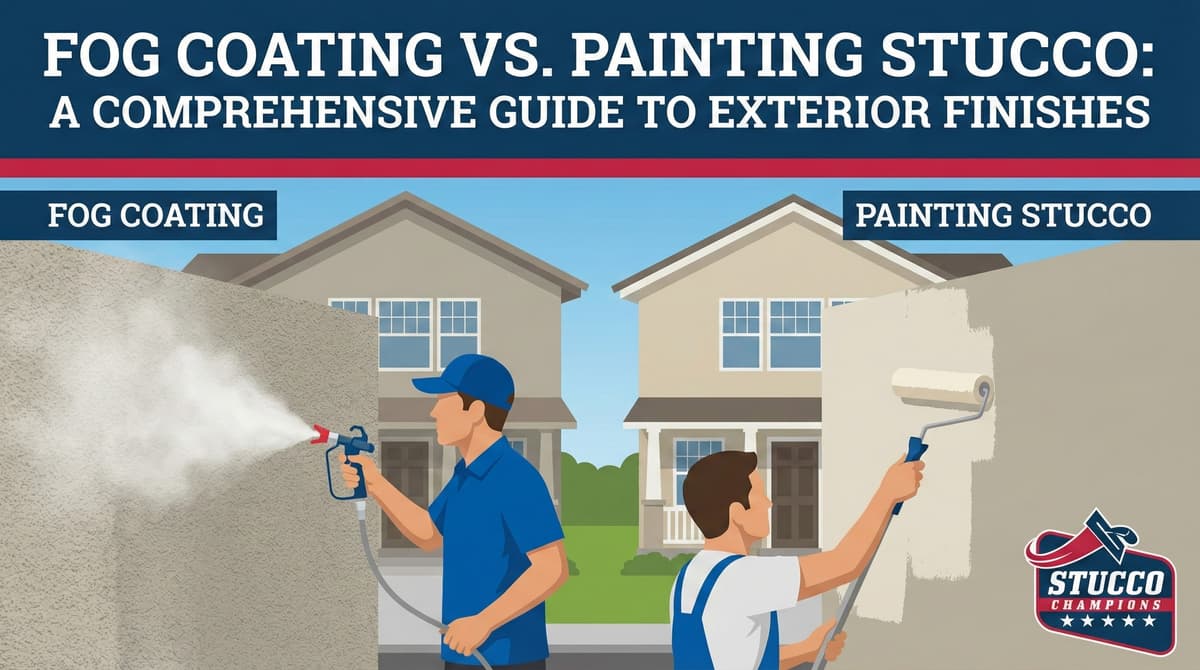
When your stucco starts to look faded, stained, or tired, you face a critical fork in the road: Do you paint it, or do you "fog" it? To the average homeowner, these might sound like the same thing. To a stucco professional, they are chemically opposite.
Paint creates a film on top of the wall.
Fog Coat absorbs into the wall.
Choosing the wrong one can lead to peeling, trapped moisture, and higher maintenance costs down the road. This guide breaks down the science, the cost, and the specific use cases for each method.
1. The "Fog Coat" (The Purist’s Choice)
A Fog Coat is not paint. It is a cement-based maintenance coating composed of white Portland cement, lime, and pigment. It is sold in bags, mixed with water, and sprayed onto the wall.
How It Works
Because stucco is porous, the fog coat soaks into the existing matrix and becomes part of the stone. It doesn't seal the surface; it re-colors the cement itself. It maintains the original texture and breathability of the wall.
Best For: Reviving traditional Spanish, Tuscan, or Santa Barbara style homes where the "Old World" mottled look is desired.
Free Assessment
Noticing Stucco Damage?
Get a free on-site assessment from a licensed contractor. $0 deposit, no obligation.
GET FREE ASSESSMENT2. The "Stucco Paint" (The Modern Choice)
Painting stucco involves applying a heavy-bodied Acrylic or Elastomeric coating. Unlike the thin latex paint used on wood siding, high-quality stucco paint is thick enough to bridge hairline cracks.
Best For: Modern homes requiring uniform color, changing the color drastically (e.g., beige to white), or walls with many repairs that need to be hidden.
3. The Critical Decision Matrix
Before you choose, you must pass the "substrate test." There are strict rules about what you can apply over what.
⚠️ The "One-Way Street" Rule
You cannot Fog Coat over Paint.
Fog coat relies on absorption. If your wall has ever been painted, the pores are sealed. The fog coat will wash right off.
You cannot Fog Coat over Acrylic (Synthetic) Stucco. Cement does not bond to plastic.
However, you CAN paint over almost anything.
4. Breathability: The Hidden Factor
Stucco needs to breathe. It absorbs rain and releases it through evaporation.
Fog Coat: 100% Breathable. Zero risk of blistering.
Paint: If you use cheap paint, you seal the moisture in, causing bubbles. You must use "permeable" acrylics that shed water but allow vapor to escape.
5. Color Limitations
- Fog Coat: Limited to the 30-40 standard earth tones offered by manufacturers (LaHabra/Omega). It cannot achieve dark, deep colors (Navy, Black) because the white cement base dilutes the pigment.
- Paint: Infinite color options. You can match any swatch from Benjamin Moore or Sherwin Williams.
6. Cost and Maintenance
- Fog Coat:Initial Cost: Moderate. Material is cheap, but labor is skilled (requires masking and specialized spraying).
Longevity: 15-20 years. It fades gradually like stone. No peeling.
- Painting:Initial Cost: Higher material cost, generally faster labor.
Longevity: 7-10 years. Eventually, the film will chalk or peel and require re-coating.
Conclusion: Which is Right for You?
If your home is original, unpainted stucco and you want to refresh the color while keeping maintenance low, Fog Coat is the superior technical choice.
If your home has already been painted, or you want a modern, uniform color change, High-Build Acrylic Painting is your only option.
Related Resources
Last week, we shared The Comprehensive Guide to Selecting the Right Sand for Stucco Projects. The texture of your wall dictates how the finish coat will look.